The Supergen ORE Hub brings together ten partner universities, with research expertise spanning the breadth of the offshore renewable energy sector - from geotechnical engineering and technology development to economics and environmental science. The partner universities are the Universities of Oxford (project lead), Aberdeen, Edinburgh, Exeter, Hull, Manchester, Plymouth, Southampton, Strathclyde, and Warwick.
The Supergen ORE Hub will continue to drive strategic research, ensuring that underpinning research and forward-thinking translate into sustained innovation and accelerated delivery.
Below we provide some examples of research taking place across these institutions that is contributing to an innovation, thriving sector and supports its acceleration towards achieving Net Zero.
Advancing Subsea Cable Standards
Collaborative research with industry partners has transformed the design of subsea power cables for offshore renewables. The findings have been incorporated into the British Standard BS10009, enabling lighter, more cost efficient cable designs that reduce material use, installation costs and environmental impact.
The guidance has already supported over 25 GW of renewable energy projects worldwide and over 4,000 km of subsea cables.
Collaborative research led by Professor David White of the University of Southampton in a collaboration with the University of Western Australia (UWA) and industry partners. Further information
Photo - Cable laying at EMEC
Find out more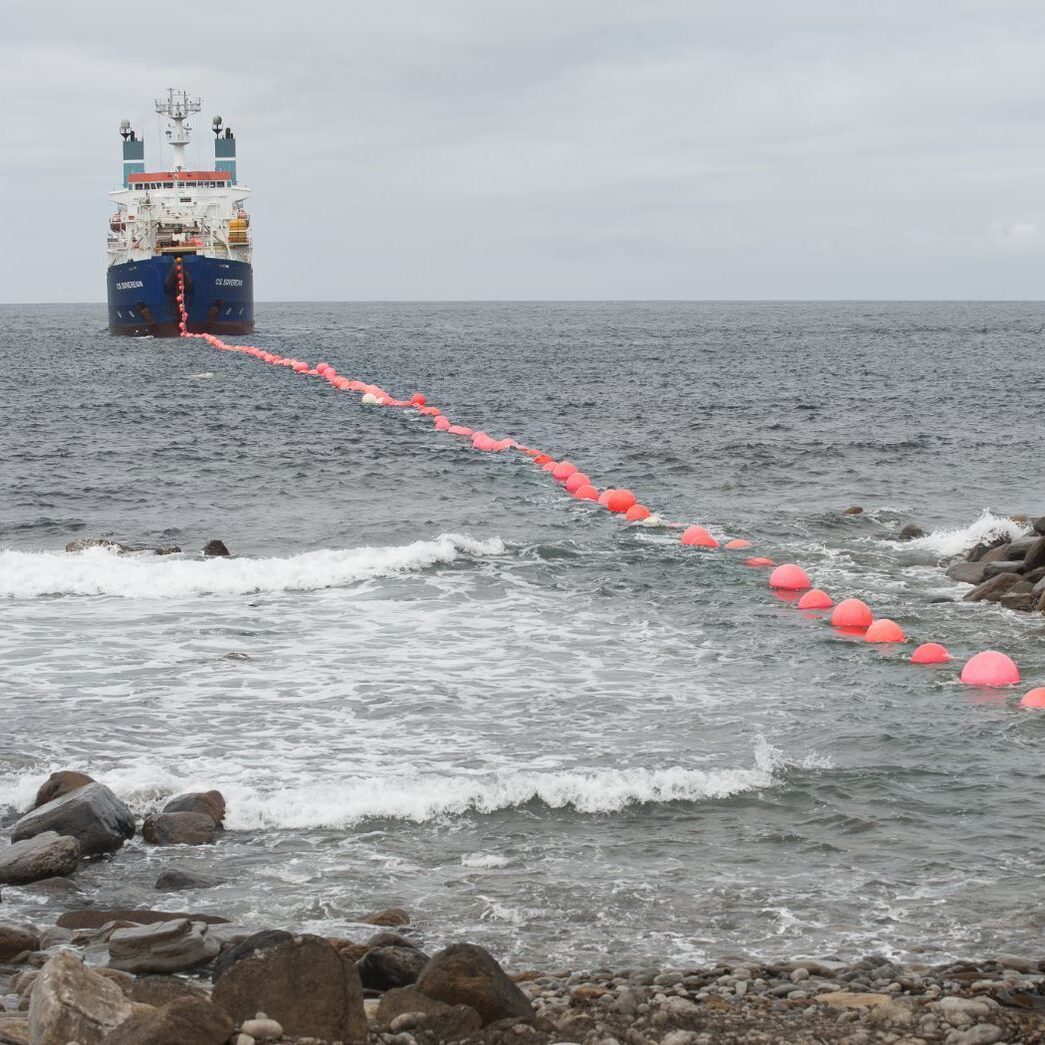
Accounting for Inter-Farm Effects
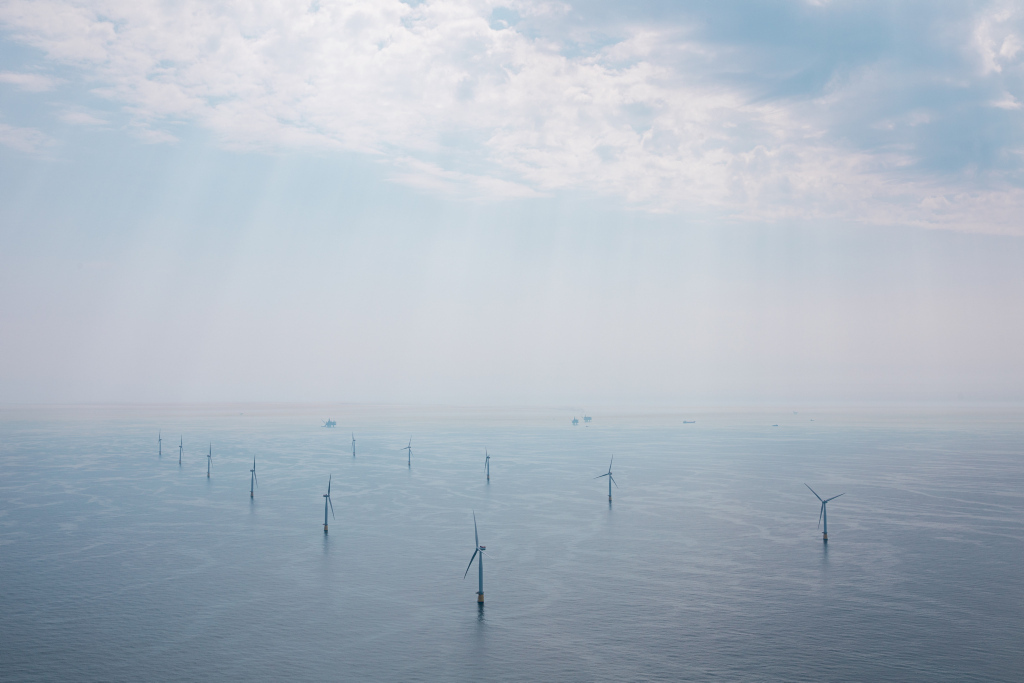
Improved understanding of wake effects between wind farms in close proximity is being unlocked through our collaborative research. These advances developing our understanding of modelling accuracy and capabilities to inform wind farm planning and streamline project development.
This work aims to support policymakers and industry leaders to optimise offshore wind energy production in the drive to Net Zero.
Collaborative work led by the University of Manchester and industry partners.
Further information
Tidal Turbine Benchmarking
Leadership of a large-scale experimental campaign and co-ordination of community benchmarking is providing increased confidence in model predictions of tidal turbine loading. The resulting dataset offers high-resolution data for validating numerical models and quantifying uncertainties associated with turbine design and analysis.
This work is enabling reduction of conservatism in the design of tidal turbines, particularly for fatigue loading, benefiting overall system cost and supporting the development of tidal energy systems.
Community-wide research project led by Professor Richard Willden at the University of Oxford.
Further information
Influencing Strategic Decision Makers
A series of policy guidance reports from the Policy and Innovation Group at the University of Edinburgh translates complex offshore renewable energy challenges and opportunities into actionable insights, supporting decision-making and the development of a thriving UK sector.
A recent report demonstrates the potential system benefits of wave and tidal stream energy, with the potential to save Great Britain’s energy system £1 billion a year by 2050.
The Group’s work provides evidence to inform policy and strategies across offshore wind, wave and tidal energy, helping accelerate progress towards Net Zero while maximising UK economic benefits.
Further information
Potential to Reduce Consenting Time by 40%
Recent research is helping to transform environmental assessment for offshore renewable projects. By shifting from project by-project environmental monitoring to the Regional Ecosystem Monitoring Programme (REMP), data will be collected much more efficiently whilst building a improved picture of our marine ecosystems. An ORE Catapult report highlighted this approach could reduce consenting times by 40%.
Collaborative research led by Professor Beth Scott at the University of Aberdeen (UoA) with ORE Catapult.
Further information
Targeting High-Cost Components
Recent research has supported new design guidance for pile foundations in chalk materials, enabling optimisation of pile lengths, reduced installation risk and better quantification of overall design risk. There is currently no established design method to cover lateral loading at chalk sites.
This work could result in significant cost savings across projects, particularly in offshore wind, where foundations can account for up to 25% of the installed capital cost.
Collaborative work between Professor Byron Byrne of the University of Oxford and Imperial College London through the ALPACA project.
Further information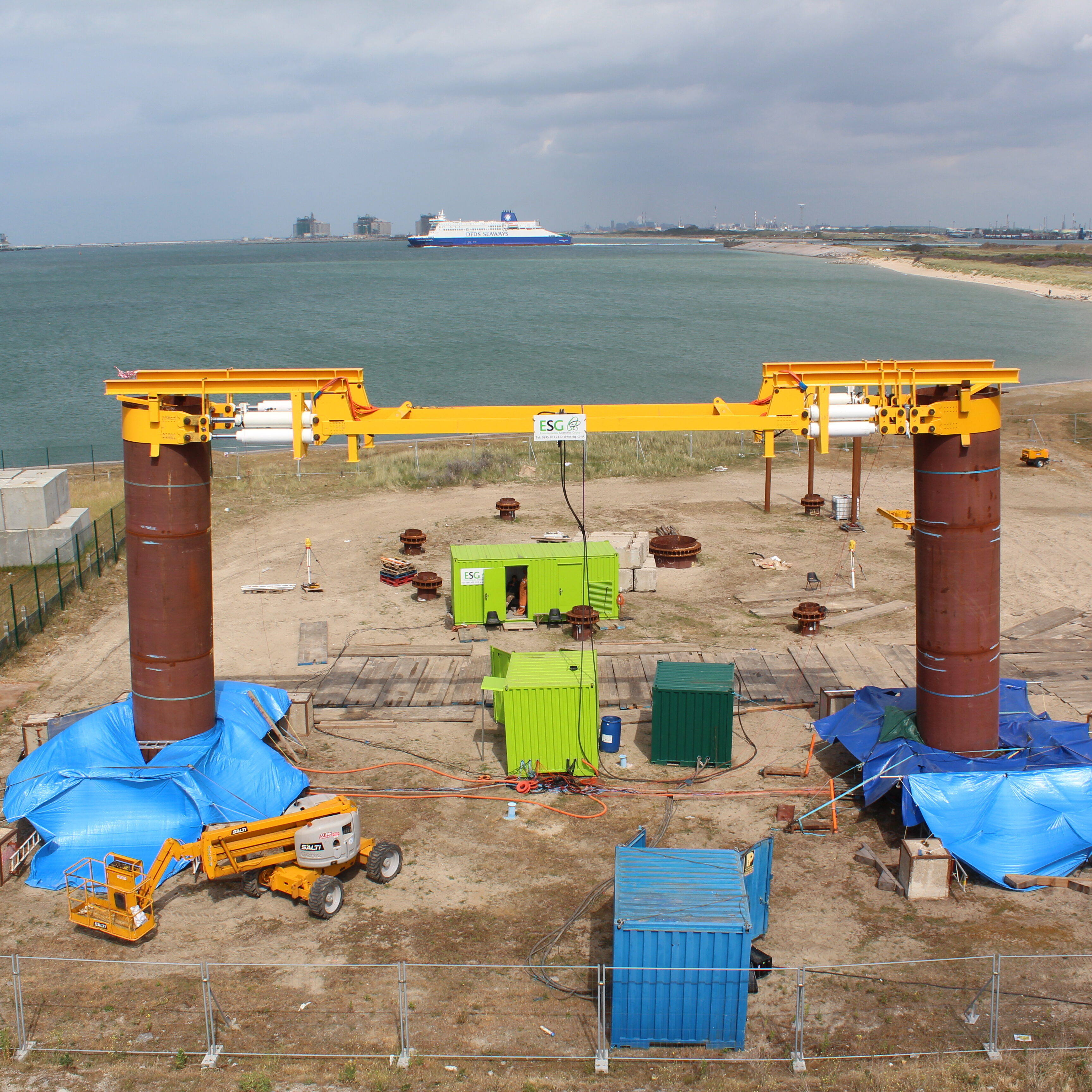
Supporting the Grid’s Transition to Renewables
Collaborative research with the UK’s National Energy System Operator (NESO) has developed a real-time electromagnetic transient simulation framework for assessing the stability of power systems with large-scale offshore wind and HVDC connections.
Integrated into Great Britain’s grid modelling framework, RealSim improves the accuracy of stability analysis, supports operational decision-making, and positions NESO to lead in the transition to a renewable-dominated, low-inertia power system.
Research led by Professor Xiaowei Zhao at the University of Warwick, in collaboration with NESO.
Further information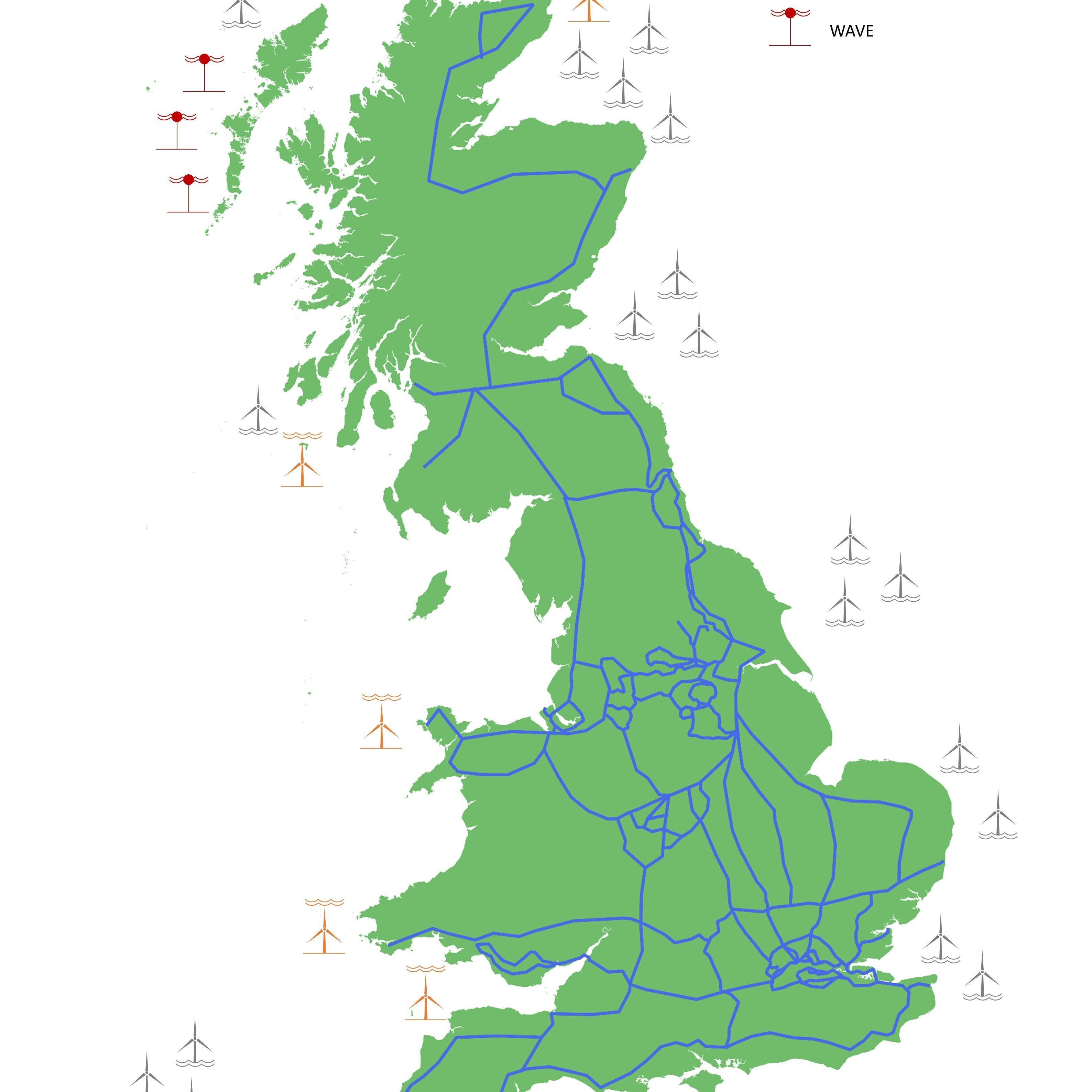
Accurately Predicting Loads
Researchers at the University of Oxford and Plymouth are developing the short design-event method, in which shorter simulations are used to predict design loads more efficiently. This allows for quicker analysis and greater insight into floating offshore renewable energy devices during extreme events.
Working with a Wave Energy Converter (WEC) developer, this research has already led to design improvements. The research is contributing to enhanced future recommended practices and design standards for floating wind.
Collaborative research led by the University of Oxford and University of Plymouth
Further information
Wind Power Optimisation
Research-driven innovation is being designed to help wind farms generate more energy from the same wind resource. AIOLUS is an AI-driven wind farm optimisation tool that coordinates the operation of turbines across an entire wind farm, adapting to changing wind conditions to improve overall performance. Using multi-agent reinforcement learning, AIOLUS coordinates turbine control across entire wind farms to tackle multiple challenges including farm-wake effects.
AIOLUS has increased annual energy production by up to 5% in demonstrations - showing how smarter use of existing wind generation can contribute to a more efficient and productive energy system and supporting the achievement of UK Government Net Zero targets.
AIOLUS, a Manchester Prize finalist, is led by Prof. Xiaowei Zhao at the University of Warwick.
Further information